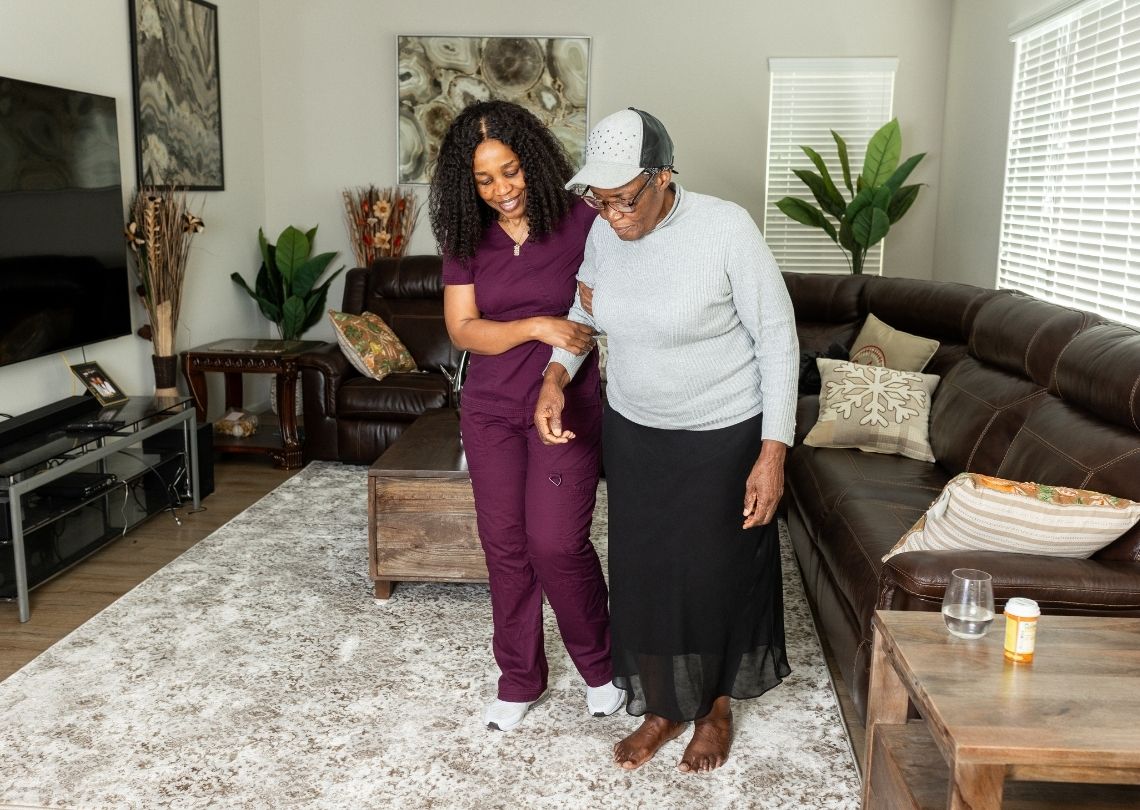
In-home support that helps care plans stay on track.
Therapy only works when it’s consistent.
But keeping up with routines at home can feel overwhelming.
Our caregivers provide steady, supportive assistance that helps clients follow therapy plans safely and confidently in their own home.
Therapy often comes with exercises, routines, and follow-through. Without support, it’s easy to fall behind or give up. Families may worry about missed sessions, poor form, or loss of progress. That’s where extra support makes a difference.
Our caregivers help clients stay consistent with prescribed therapy routines. We provide encouragement, reminders, and hands-on assistance as needed. Care is adjusted to the client’s abilities and comfort level. The focus is always safety, confidence, and steady progress.
Support is based on care plans and individual needs.
• Help with prescribed exercises
• Mobility support during therapy routines
• Reminders and encouragement
• Safe positioning and movement
• Support between formal therapy visits
We do not replace licensed therapists.
We support their work at home.
Consistent support improves outcomes.
• It helps clients stay engaged with therapy.
• It reduces setbacks and frustration.
• It gives families peace of mind knowing routines are followed safely.
Progress feels more manageable with the right help in place.
Assistance With Therapies is helpful for:
• Seniors recovering from illness or injury
• Adults with disabilities of any age
• Clients using long-term care insurance
• Clients using veterans benefits
• Clients supported by worker’s compensation
Support is always tailored to the individual.
Your loved one’s safety comes first.
We are fully licensed and insured.
Our caregivers are trained to provide supportive, non-clinical assistance.
Care is delivered with respect, patience, and consistency.
Getting support is simple.
Support fits into your existing care plan.
You don’t have to manage therapy alone.
Schedule an assessment and talk with a caring professional who can help you decide what support makes sense at home.
Local care. Trusted support. Real peace of mind.
We support seniors, veterans, and adults with disabilities who want to remain safe and comfortable at home.
Our services are built to meet people where they are and adjust as needs change.
We work closely with families who want reliable care without losing control or peace of mind.
Support is always respectful, flexible, and centered on the individual.
We also help clients who are using:
1
Share your needs and ask questions. No pressure.
2
We recommend support that fits your situation and schedule.
3
We pair you with a caregiver who fits your needs and preferences.
4
Care starts and adjusts as life changes.
Maintaining mobility is essential for staying independent, comfortable, and safe at home. For seniors and individuals experiencing difficulty walking, standing, or moving around, professional mobility assistance can make everyday activities easier and help reduce the risk of falls. Below are answers to frequently asked questions about Mobility Support at Home and how caregivers can help your loved one move with greater confidence.
Mobility support at home is a non-medical caregiving service that helps seniors and individuals with limited mobility move safely throughout their homes. Caregivers assist with walking, standing, sitting, transferring between furniture, and navigating everyday spaces to promote independence and reduce fall risks.
Mobility assistance can benefit seniors, individuals with physical disabilities, people recovering from surgery or hospitalization, and those experiencing weakness, balance problems, or difficulty walking. It’s especially helpful for individuals who want to remain independent at home but need extra support with everyday movement.
Professional caregivers can assist with walking around the home, getting in and out of bed, standing up from chairs, transferring to wheelchairs, and moving safely between rooms. They may also provide support when using walkers or canes, assist with navigating stairs when appropriate, and help maintain clear pathways to reduce potential fall hazards.
No. Mobility support at home is generally considered a non-medical home care service. Caregivers provide physical assistance, supervision, and encouragement during daily movements. Medical services such as physical therapy, rehabilitation treatments, and medical assessments must be performed by qualified healthcare professionals.
Common signs include difficulty standing up, frequent loss of balance, holding onto furniture while walking, trouble getting in and out of bed, or fear of falling. If your loved one has experienced a recent fall or is avoiding daily activities because of mobility challenges, professional in-home assistance may help improve their safety and confidence.
Mobility support can typically be arranged based on your loved one’s needs and daily routine. Depending on the home care provider, services may be available for a few hours a day, several days a week, or more consistent assistance. Flexible scheduling allows families to choose the level of support that works best for their situation.
Many home care agencies prioritize caregiver consistency to help clients feel comfortable and build trusting relationships. Having a familiar caregiver can be especially beneficial for individuals with mobility limitations because the caregiver becomes familiar with their routines, physical abilities, and personal preferences. Consistency depends on caregiver availability and scheduling.
The start date depends on the home care agency, caregiver availability, and your loved one’s specific needs. Some providers may be able to arrange assistance within a short period following an initial consultation and care assessment. Contacting a home care provider directly is the best way to discuss scheduling and determine when services can begin.
Yes. Non-medical caregivers can provide valuable mobility assistance for individuals returning home after surgery or hospitalization. They may help with walking, getting in and out of bed, transferring safely, and completing daily activities while following applicable discharge instructions and mobility restrictions. Physical rehabilitation and therapeutic exercises should remain under the guidance of licensed healthcare professionals.
Mobility support at home may be covered under certain long-term care insurance policies or qualifying Veterans benefits programs. Coverage depends on the individual’s policy, eligibility, and the specific services provided. Families should review their benefits and contact the home care agency to confirm accepted payment options and any available assistance with documentation
We provide professional mobility support at home for seniors and individuals who need assistance walking, standing, transferring, and moving safely throughout their homes. Our compassionate caregivers help clients maintain independence, improve daily comfort, and reduce the risk of falls. We offer in-home mobility assistance to families throughout the following communities: