Most people treat bathing and grooming like “private stuff,” so they wait until a scary slip makes it everybody’s business. The blunt answer to how help with bathing and grooming at home reduces fall risks is that it removes the exact moments where balance fails: stepping over a wet threshold, turning to reach a towel, standing on one leg to pull up pants, rushing because the water’s getting cold, getting dizzy from a medication, or just misjudging where the floor is in bad light. Put a capable helper in the room, clean up the environment, and tighten the routine, and you chop down the highest-risk movements in the most injury-prone room in the house, which tracks with how injury data flags bathrooms as a uniquely unforgiving place to go down (this study on bathroom fall injury risk is sobering).
Falls are common, too. The CDC’s fall statistics make it painfully clear this is not an edge case, it’s a normal part of aging unless you actively intervene.
key takeaways
- Help during bathing and grooming reduces fall risk by covering the “transition moments” that break people: stepping in, turning, rinsing, drying, dressing, and standing at the sink while dizzy or distracted.
- The fastest wins come from a tight bathroom setup: a properly installed bar, non-slip surfaces, a shower seat, brighter lighting, and a clutter-free path.
- A good routine beats good intentions. Warm room, within-reach supplies, and a drying plan prevent the rushed, slippery improv that causes most falls.
- Higher-risk adults often need more than equipment: medication management, vision checks, strength and balance work, and sometimes a clinician-led home assessment.
How does bathing help prevent falls?
Bathing assistance helps reduce fall risk by turning what can be a chaotic series of movements into a safe, well-planned routine. Most falls don’t happen because someone forgets how to walk. They happen because a person is trying to balance, bend, twist, reach, and move across wet, slippery surfaces all at the same time.
If you’ve ever watched someone try to wash their lower legs while standing in a shower, you’ve seen how challenging the task can be. What seems like a simple routine can quickly become a dangerous balancing act.
High-Risk Moments
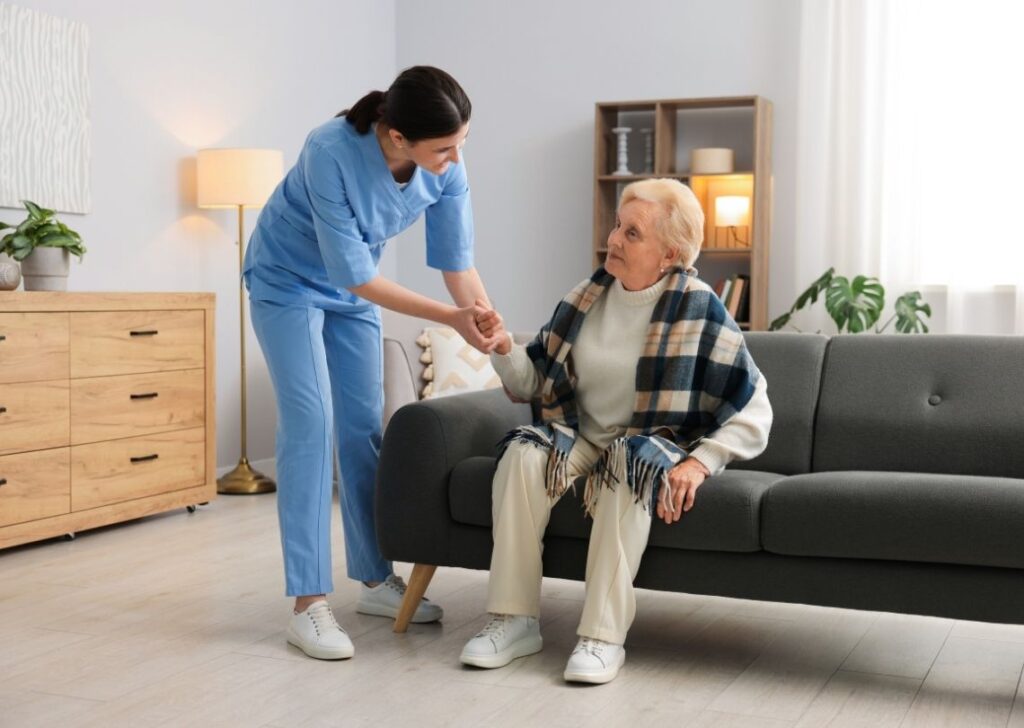
Certain parts of bathing are especially risky, including stepping into or out of the tub or shower, turning to sit, standing up from a low surface, reaching for soap, and drying off afterward. These are the moments when a caregiver’s assistance can make the greatest difference. A trained caregiver can provide steady support, guide safe foot placement, assist with transfers, and help prevent sudden movements that could lead to a fall.
Hazard Removal
A caregiver also helps create a safer bathroom environment by wiping up standing water, straightening bath mats, keeping towels out of walking paths, organizing grooming supplies within easy reach, and reducing unnecessary clutter. Small adjustments like improving lighting, keeping walkways clear, and removing tripping hazards can significantly reduce the risk of slips and falls.
Safer Body Mechanics
Bathing and grooming require movements such as bending, twisting, reaching, looking downward, lifting one foot, and closing the eyes while rinsing shampoo. These actions can challenge balance, especially for older adults. A caregiver can encourage safer movement patterns, recommend completing certain tasks while seated, and help create a slower, more controlled routine that minimizes unnecessary strain and reduces the likelihood of injury.
Who faces higher fall risk at home?
People want a neat category like “older adults,” but real fall risk is messier: medical factors, mobility limits, and medication effects overlap, then the home environment turns that overlap into consequences.
Medical factors
Higher fall risk is often associated with chronic conditions such as Parkinson’s disease, the effects of a stroke, peripheral neuropathy, arthritis that affects walking, vestibular disorders that interfere with balance, diabetes-related foot numbness, or cognitive decline that makes it difficult to remember the steps involved in bathing. Dementia can create additional challenges by increasing confusion, resistance to assistance, impulsive movements, or forgetting the next step during transfers. Because of these factors, bathroom safety requires more than simply telling someone to “be careful.” A well-planned environment, proper support, and consistent routines can significantly reduce the risk of falls and injuries.
Vision is another sleeper factor. If someone’s depth perception is off, a tub threshold is basically a trick step.
Mobility limits
If someone uses a walker, cane, or wheelchair, bathing can become a series of micro-transfers. Even adults who walk fine in a hallway may wobble when they’re barefoot on wet surfaces, turning to reach, or stepping around a bath mat. Add fatigue, and stability drops fast. The practical answer is not “try harder.” It’s to reduce standing time, raise surfaces, and set up handholds that match how the person moves.
Medication effects
Medications are a quiet saboteur: dizziness, orthostatic hypotension, sedation, blurred vision, urgency from diuretics, or the “my brain feels slow” effect that makes people misjudge timing. When a caregiver is involved, they can notice patterns and coordinate with clinicians, which lines up with research on how home health support ties into injury prevention, including this NIH-backed look at home health aides and injury prevention.
What bathroom hazards cause most falls?
People blame “slippery tile,” but the big hazards are usually combinations, not single villains.
Wet surfaces
Water plus soap plus smooth flooring is obvious, but the sneakier issue is where the water goes. Drips on the path between shower and towel. Puddles near the sink after face washing. A damp bath mat that slides because it has no grip. A helper who immediately wipes, swaps towels, and manages the floor reduces risk in a very direct way.
Tub thresholds
Stepping over a tub wall demands hip flexion, single-leg balance, and a confident landing. If someone’s legs are weak or their feet can’t feel the floor well, it’s a setup for a fall. Walk-in showers or low-threshold entries lower this risk dramatically, but if the house has a standard tub, you compensate with a stable bench, grab bars, and a no-rush transfer.
Poor lighting
Bad lighting makes it harder to judge distances, identify changes in floor surfaces, and spot potential hazards. Nightlights, brighter overhead lighting, and light switches that can be reached without crossing a wet floor all help improve visibility and reduce the risk of falls. Many bathroom injuries occur during routine daily activities rather than unusual accidents, making proper lighting an important part of creating a safer bathing environment.
Make the bathroom safer first
If you’re choosing where to spend time and money, start here. Bathrooms concentrate water, hard surfaces, tight turns, and transitions. That is the whole recipe.
Grab bars
Grab bars only help if they’re installed correctly, in the right place, and anchored into studs or proper blocking. Towel racks are not bars. Suction-cup handles are not bars. A well-placed bar near the toilet and in the shower gives a predictable handhold for sit-stand and stepping, especially when the person’s feet are wet and their center of gravity is shifting.
Non-slip surfaces
Non-slip strips, textured decals, non-skid mats with grippy backing, and a floor that isn’t polished into a mirror all reduce slipping. Still, mats can become a trip hazard if they curl or slide, so you want the kind that stays flat and predictable. If you do one home modification today, make the floor boring.
Shower seating
A shower chair or bench lowers the amount of standing, and standing is where wobble turns into a fall. Sitting also changes body mechanics: washing lower legs becomes a reach from a stable base, not a single-leg balance challenge.
Here’s a simple way I think about priority fixes, especially for families who feel overwhelmed:
Bathroom problem | What to change | Why it reduces fall risk |
Slips during washing | Non-slip surface + shower seat | Less standing on wet floor |
Unsteady entry/exit | Grab bars + bench transfer | Stabilizes the highest-risk moment |
Dizziness at sink | Sturdy chair + clear counter | Removes long standing and reaching |
Nighttime trips | Brighter lighting + clear path | Fewer missteps and stumbles |
Use safer transfer steps every time
Transfers are where good intentions go to die. The same person can do a transfer safely 20 times, then rush once and fall.
Prep the path
Before water runs, the path should be clear: no laundry piles, no loose rugs, no dangling towel corners, no pets underfoot. Put the phone within reach (not on the counter across the room). If you use mobility aids, position the walker so it’s reachable at the exit point, not parked outside the bathroom like an afterthought.
Sit-stand rules
The boring rules work: feet flat, knees slightly behind toes, hands to stable supports, pause after standing to check dizziness. A raised toilet seat can cut strain, and a stable bar makes the movement more controlled. People often stand and pivot too fast because they’re cold. Warm the room, and you remove that “hurry up” pressure.
Two-person assist cues
Sometimes one helper is not enough, especially with significant weakness, cognitive issues, or unpredictable balance. If you’re doing a two-person assist, agree on cues before moving: “ready, set, stand,” not improvised grabbing. If you’re not trained, get trained. An occupational therapist can teach safe techniques that protect the person and your own back.
Set a safer bathing routine
Routines sound boring until you realize most falls happen during improvisation.
Water setup
Set water temperature before the person steps in. Keep it warm enough that no one rushes, and check that the floor outside the shower is ready with a stable mat that won’t skid. If the shower head is handheld, keep it docked where the person can reach without twisting.
Within-reach setup
Soap, shampoo, washcloth, towel, clean clothes, incontinence supplies if needed, all within reach from the seated position. When items are out of reach, people lean. Leaning turns into lunging. Lunging turns into falling.
Drying plan
Drying is a whole phase, not an afterthought. The safest approach is to sit, towel dry major areas first, then stand only when feet are dry and the floor is dry enough to grip. If a caregiver is present, they can manage towel placement and floor wiping while the person stays seated, which is one of those small “assistant moves” that quietly prevents falls.
Reduce grooming and dressing fall risks
Grooming may seem like a low-risk daily activity, but it often involves movements that can challenge balance and increase the likelihood of a fall. Simple tasks such as leaning over a sink, tilting the head back while rinsing hair, reaching for toiletries, or bending down to plug in a hair dryer can create instability, especially for older adults with mobility limitations.
Creating a safer grooming environment starts with reducing the need to stand for extended periods. A sturdy chair positioned at the sink allows seniors to brush their teeth, shave, style their hair, and complete skincare routines while seated. Electrical cords should be kept away from walkways to eliminate tripping hazards, and mirrors should be positioned at a comfortable height to prevent excessive bending or leaning.
Dressing is another activity that can present unexpected risks. Many falls occur when older adults attempt to put on socks, underwear, or pants while standing on one leg. Encouraging dressing while seated provides greater stability and reduces the chance of losing balance. Keeping clothing, shoes, and grooming supplies within easy reach can also minimize unnecessary stretching, twisting, or bending.
The most effective safety strategies are often the simplest ones. By approaching grooming and dressing routines with practicality and attention to everyday challenges, families and caregivers can help older adults maintain their independence while significantly lowering the risk of preventable falls.
Add Strength, Balance, and Vision Supports
Bathing and grooming assistance can significantly reduce immediate risks, but long-term fall prevention requires a broader approach. The goal is not only to make daily routines safer but also to help older adults maintain the physical abilities that support independence and mobility.
Regular physical activity plays an important role in reducing fall risk. Simple exercises that focus on leg strength, balance, and coordination can improve stability during everyday activities such as walking, standing from a chair, getting in and out of bed, or navigating the bathroom. Even basic movements like sit-to-stand exercises can strengthen key muscle groups that support balance and mobility. As strength and confidence improve, many seniors feel more secure moving around their homes, which can reduce the fear of falling.
Fear itself is often an overlooked risk factor. Older adults who worry about falling may begin moving more cautiously or avoid activity altogether. This can lead to muscle weakness, reduced flexibility, and decreased balance over time, creating an even greater risk of falls. Encouraging safe, appropriate movement helps maintain physical function while building confidence.
Vision also plays a critical role in home safety. Changes in eyesight can make it difficult to judge distances, identify obstacles, or safely navigate transitions between different floor surfaces. Regular eye examinations can help detect vision problems early and ensure that prescriptions remain up to date. Proper lighting throughout the home, especially in bathrooms, hallways, and stairways, further supports safe movement.
Footwear deserves equal attention. Shoes with non-slip soles and proper support can improve stability, while walking barefoot or wearing loose-fitting slippers on smooth surfaces may increase the risk of slips and falls. Choosing footwear designed for safety and comfort can make a meaningful difference in daily mobility.
Combining personal care assistance with strength-building activities, vision support, safe footwear, and thoughtful home modifications creates a more comprehensive fall-prevention strategy. Together, these measures help older adults remain safer, more confident, and more independent while continuing to age comfortably at home.
When should you involve clinicians?
While many fall-prevention measures can be implemented at home, there are situations where professional medical guidance becomes essential. If an older adult experiences repeated falls, suffers a fall-related injury, develops new weakness or dizziness, or shows noticeable changes in mobility, it is important to seek an evaluation from a qualified healthcare provider. Early intervention can help identify underlying issues before they lead to more serious accidents or loss of independence.
Professional support is also valuable when cognitive conditions such as dementia or Alzheimer’s disease begin affecting personal care routines. Confusion, impaired judgment, and difficulty following instructions can make bathing, grooming, and transferring between surfaces significantly more challenging. In these cases, healthcare professionals can recommend strategies and resources that improve both safety and quality of care.
Physical therapists are often a key part of a comprehensive fall-prevention plan. They can assess balance, gait, strength, flexibility, and mobility limitations while recommending exercises tailored to the individual’s needs. Physical therapists can also determine whether assistive devices such as walkers, canes, or transfer aids are appropriate and ensure they are used correctly.
Occupational therapists provide another valuable perspective by evaluating how a person interacts with their home environment. They can identify hazards that family members may overlook because they have become accustomed to them over time. Recommendations may include bathroom safety modifications, improved lighting, adaptive equipment, and adjustments to daily routines that make personal care activities safer and more manageable.
Medication reviews are equally important. Certain medications, including sleep aids, sedatives, blood pressure medications, and some pain relievers, may contribute to dizziness, drowsiness, or balance problems. A healthcare provider can review current prescriptions and determine whether medication-related side effects may be increasing fall risk. In some cases, adjusting a dosage or changing a medication can significantly improve stability and reduce the likelihood of accidents.
Seeking professional guidance does not mean giving up independence. Instead, it provides access to specialized expertise that can help older adults remain safer, more comfortable, and more confident in their daily routines. When combined with proper bathing assistance, home modifications, and caregiver support, professional assessments can play a critical role in preventing falls and supporting successful aging in place.
Conclusion
Help with bathing and grooming reduces fall risks because it targets the exact mechanics and hazards that cause falls: wet floors, awkward transfers, reaching and bending, poor lighting, dizziness, and rushed routines. Make the bathroom safer first, lock in consistent transfer steps, shift grooming and dressing to seated setups, and treat strength, balance, vision, and medication review as part of the same plan, not separate projects. That’s how you keep someone safer at home without turning daily hygiene into a daily gamble.
FAQ
Is supervision enough, or do we need equipment?
Supervision helps most during the high-risk moments, but equipment changes the baseline. A grab bar, non-slip surface, and shower seat reduce fall risk even on days when the helper is tired or the person is stubborn.
What matters more, a walk-in shower or a tub?
A walk-in shower with a low threshold is generally easier and safer for many adults with mobility limits, but plenty of people do fine with a standard tub if transfers are set up well and the routine is consistent. The danger is the threshold plus rushing plus wet feet.
Do home modifications actually work, or is this just common sense?
Yes. Home modifications can make a meaningful difference in reducing fall risk. Simple improvements such as installing grab bars, using non-slip flooring, improving lighting, removing tripping hazards, and keeping walkways clear create a safer environment for everyday activities. When combined with consistent caregiving support and safe daily routines, these changes can significantly lower the risk of slips and falls while helping older adults maintain their independence.
What should we do if the person refuses help with bathing?
Start by changing the environment and routine to make the experience less cold, rushed, and stressful, then offer help in smaller pieces: setup, towel management, standing nearby for transfers. With dementia, resistance can be fear or confusion, not “attitude,” and you may need clinician input.
What bathroom layout are you working with?
If you tell me whether it’s a walk-in shower, shower-tub combo, or a deep bathtub, plus where the toilet and sink sit in relation to the door, the product recommendations and transfer steps get much more specific.
Restore Comfort, Confidence, And Dignity With Help With Bathing And Grooming At Home
Personal care routines are about more than staying clean. They help seniors feel confident, comfortable, and ready to enjoy each day. As mobility, balance, or health challenges make bathing and grooming more difficult, these everyday tasks can become stressful or even unsafe. Having compassionate assistance allows seniors to maintain their independence while receiving the support they need in the privacy of their own home.
Help With Bathing and Grooming at Home from Serenity Family Homecare provides respectful, personalized care tailored to each client’s needs and preferences. Our caregivers assist with bathing, hair care, shaving, oral hygiene, dressing, and other personal care routines while encouraging independence whenever possible. Every visit is centered on safety, dignity, and making daily routines easier and more comfortable.
With trusted personal care support, seniors can enjoy better hygiene, greater confidence, and a reduced risk of slips and falls. Families gain peace of mind knowing their loved one is receiving compassionate, professional care from experienced caregivers. Contact Serenity Family Homecare today to schedule an assessment and learn how our Help With Bathing and Grooming at Home services can help your loved one live safely, comfortably, and confidently at home.
Disclaimer
The information on this website is for general education only and should not be treated as medical, legal, or professional advice. Every family and health situation is different, so you should speak with a qualified healthcare provider or appropriate professional before making care decisions. Do not make changes to a care plan or rely on this content as a substitute for professional guidance. The information on this site may not reflect the most current medical standards or practices. Serenity Family Homecare is not responsible for any actions taken or not taken based on the material on this website.