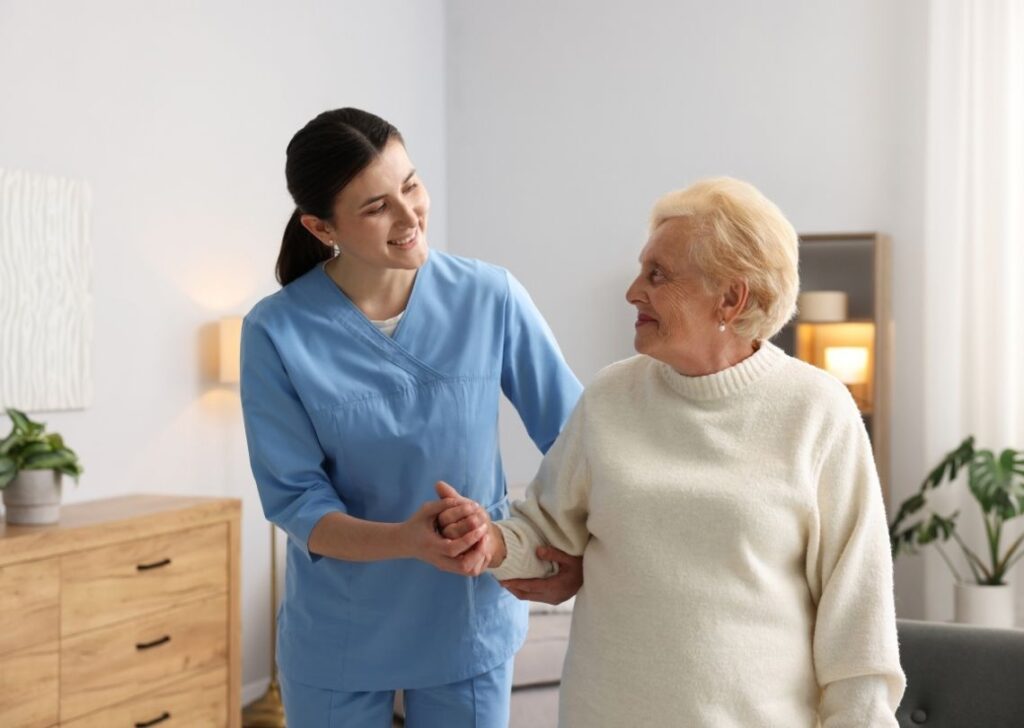
Professional help with bathing and grooming at home mainly does four things for older adults: it lowers fall risk in the most dangerous room in the house, keeps skin and nails from turning into a slow-motion medical problem, makes daily life more comfortable when mobility or cognition gets messy, and protects dignity so the person doesn’t feel like they’ve been reduced to a task. It also gives family caregivers their life back, at least a little, because intimate personal care is where burnout loves to breed.
And yes, it’s “just” bathing and grooming. Except it never is. Bath time is where weakness shows up, where balance slips, where skin tears, where shame sneaks in, where dementia agitation spikes, where someone decides it’s easier to skip the whole thing and “do it tomorrow.” Tomorrow is next week. That’s how small hygiene problems turn into health problems.
key takeaways
- A trained caregiver doing bathing assistance at home can sharply reduce bathroom accidents, especially during transfers, turning, and towel-drying when floors get slick and attention drifts.
- Consistent personal hygiene and grooming protects aging skin, helps prevent infections, and catches early warning signs (rashes, bruising, skin tears, pressure areas) before they blow up.
- Respectful, consent-based personal care supports emotional well-being and independence, particularly for elderly individuals who hate feeling exposed or “handled.”
- A good provider is defined less by promises and more by screening, a clear care plan, safety practices, and documentation you can actually read.
What problems does help with hygiene solve?
A lot of families don’t realize how common bathing difficulty is until they’re already improvising. That old federal data point that 83% of home care recipients need bathing assistance is not trivia, it’s a giant blinking sign that this is a normal, predictable need, not some rare failure of aging or willpower, as spelled out in the research summary on bathing assistance needs among home care recipients.
The core problem is simple: bathing is a full-body sport. Heat, steam, slippery surfaces, awkward bending, standing with eyes closed, lifting a leg over a tub wall, turning to rinse, reaching behind your back. If you have arthritis, neuropathy, vertigo, post-stroke weakness, chronic kidney disease fatigue, heart disease shortness of breath, or you’re in recovery after rehabilitation, that “sport” becomes a hazard.
Common barriers
People picture a senior who “can’t” bathe. The more common reality is someone who technically can, but pays for it with pain, fear, exhaustion, or embarrassment. Mobility assistance needs to creep in: less ankle strength, slower reactions, weaker grip, worse depth perception at night. Then grooming needs to pile on. Hair washing becomes a shoulder issue. Nail care becomes a vision and flexibility issue. Oral care gets skipped because the sink stance is unstable.
Family members then step in, and suddenly a spouse is trying to be a nurse, a daughter is doing cleaning in a steamy bathroom while also worrying about a fall, and everyone’s pretending it’s fine. It’s not fine. It’s just familiar.
When risk rises
The bathroom is where risk gets loud. Falls are already common in older adults, and the baseline is ugly: about 1 in 4 adults over 65 fall each year. Add water, tile, rushing, and pride. You can see where this goes.
Risk also rises after hospitalization or a medication change, when blood pressure drops or dizziness shows up. It rises with incontinence care needs, when someone tries to hurry to “clean up” and moves too fast. It rises with dementia, when the person no longer understands what’s happening and resists, which turns a routine into a wrestling match.
Signs help is needed
You don’t need a dramatic incident to justify home health support. The quiet signs count, and they’re usually the real story:
- Skipped showers, “bird baths,” or the same clothes showing up on repeat because changing is hard.
- New odors, skin redness, groin irritation, or repeated urinary tract infections that track back to poor hygiene practices.
- Fear behaviors: refusing to bathe, bargaining, anger, joking it off, or insisting “I already did” when they didn’t.
- A family caregiver gets snappy, sore, or emotionally wrecked after helping, because intimate care hits differently.
Improve bathroom safety and prevent falls
If you hire professional home care for bathing, you’re paying for technique, pacing, and awareness as much as the actual washing. People love to focus on equipment. Equipment is great. A skilled caregiver is the real safety device.
Transfer support
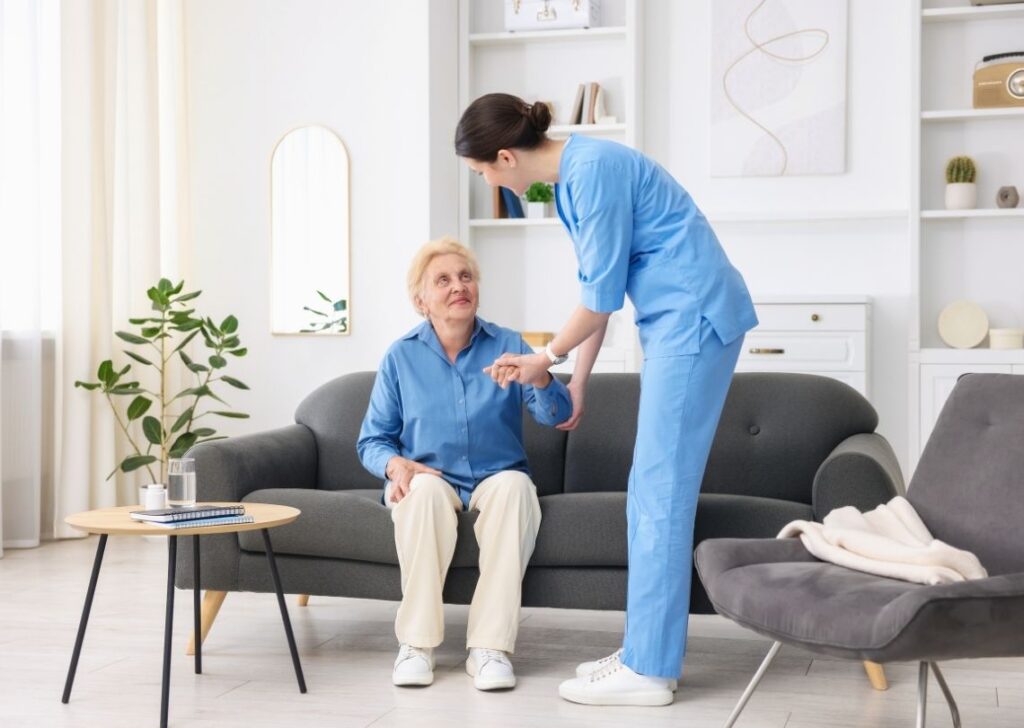
Transfers are where falls love to happen: sit-to-stand from the toilet, stepping into the tub, turning to sit on a shower chair, pivoting with wet feet. A trained home care aide will cue the movement, position feet, lock brakes if a walker is involved, and keep the center of gravity under control.
Family caregivers often try to “catch” someone. That’s how backs get injured and both people go down. Pros are taught body mechanics, and they’re more likely to insist on the safer route, even if it’s slower and mildly annoying at the moment.
Equipment basics
You don’t need a spa remodel, but you do need the basics to match the living arrangement. Grab bars anchored into studs, a non-slip mat that actually grips, a shower chair that doesn’t wobble, a handheld shower head that reduces twisting, and decent lighting. If someone is in a tighter house, even a simple raised toilet seat can change the whole transfer equation.
This is where “assisted living” sometimes gets romanticized. Assisted living can be great, but plenty of residents still struggle with bathing and prefer staying home with flexible care options, especially when the bathroom is familiar and the routine feels like theirs.
Here’s a quick comparison I use with families who are deciding between DIY, family help, and professional home care services:
Option | Safety in transfers | Privacy/dignity | Consistency | Family impact |
DIY (no help) | Low if balance is impaired | High, until it fails | Often inconsistent | Stress stays hidden |
Family member help | Medium, varies by strength/training | Often awkward | Depends on schedules | High burnout risk |
Professional home care | Higher due to training and routine | Usually best with consent-based approach | Most consistent | Relief, clearer boundaries |
Safe routines
A safe routine is boring on purpose. Same order, same towel placement, same water temperature check, same non-slip footwear, same “I’m going to help you stand now” cue before the movement happens.
Professionals also tend to document patterns. If dizziness shows up every time hair is washed, that’s not random. If a client’s blood pressure meds were changed and now showering wipes them out, that’s a care planning flag, not “just aging.”
Protect skin and prevent infections
People often underestimate how much skin changes with age. Aging skin becomes thinner, drier, and more fragile, making it easier to injure. A rough towel, overly hot water, or harsh soaps can lead to itching, cracking, skin tears, and an increased risk of infection. Gentle bathing techniques, mild cleansers, and regular moisturizing can help protect delicate skin and keep it healthier.
Skin Checks
Professional bathing assistance provides valuable opportunities to notice changes that might otherwise go unnoticed. During personal care, a caregiver can observe areas such as the backs of the legs, heels, shoulder blades, and skin folds—places that family members may not regularly see unless a problem has already developed.
Thinking of grooming as part of an overall wellness routine can make a meaningful difference. Regular bathing and grooming allow caregivers to identify new bruises, rashes, swelling, redness, skin tears, or other concerns early so they can be addressed before they become more serious.
Pressure Sore Prevention
Pressure sores usually develop gradually rather than appearing suddenly. They are more likely to occur when skin remains damp, friction happens during movement, a person stays in one position for extended periods, circulation is reduced, or incontinence is not managed effectively.
Regular bathing and grooming play an important role in prevention by keeping the skin clean and dry, applying moisture barriers when appropriate, reducing irritation, and identifying areas of redness or pressure before they worsen. Consistent daily care helps protect skin health and supports overall comfort.
Nail and Foot Care
Nail care may seem like a small task, but neglected nails can lead to significant problems. Long or jagged nails can scratch fragile skin, thickened nails can become uncomfortable, ingrown nails may lead to infections, and fungal conditions can spread if left untreated. For seniors with diabetes or poor circulation, proper foot care becomes even more important.
A trained caregiver can safely assist with basic nail and foot care while monitoring for changes that may require evaluation by a healthcare professional. Recognizing when additional medical attention is needed is an important part of providing safe, high-quality care.
Support daily comfort and chronic conditions
The point isn’t perfection. The point is comfort and function, day after day, in a way the client can live with.
Many families notice that older adults become more comfortable and confident when they receive consistent assistance with bathing and dressing. Daily routines often become less stressful, personal care is completed more safely, and seniors have more energy to enjoy other activities throughout the day. When bathing stops feeling like a daily struggle, it can improve both physical comfort and overall quality of life for the senior and provide greater peace of mind for family caregivers.
Arthritis and limited mobility
Arthritis turns twisting into pain. Limited mobility turns bending into risk. A professional caregiver adjusts the routine: seated showers, long-handled tools, gentle range-of-motion during drying, pacing that respects fatigue. They also notice whether the person is “saving” a painful shoulder all day, which can cascade into stiffness and worse function.
And no, a special diet doesn’t replace this. Diet matters, sure. Meals matter. But you can eat perfectly and still slip stepping out of a tub.
Incontinence care
Incontinence care is one of those terms that sounds clinical until you’re the person living it. Skin irritation from moisture, odor anxiety, rushing to clean up, shame, and sleep disruption. Bathing and grooming support makes it manageable: prompt cleaning, skin protection, laundry coordination, and routines that don’t make the person feel scolded.
Also, this is where family dynamics can get raw. Having a non-family caregiver handle intimate hygiene can preserve relationships. People stay spouses, not staff.
Dementia-friendly cues
If dementia is in the picture, bathing can trigger fear. Water feels like a threat. The bathroom is unfamiliar even when it’s the same house. The person may not understand why clothes are coming off. Resistance is not “being difficult,” it’s confusion.
Skilled caregivers use cues: one-step directions, modeling, familiar scents, maintaining privacy, keeping the room warm, letting the person hold a washcloth to participate. Research on dementia caregiving and mental well-being points to agitation during daily routines as a major stressor, and bathing is a classic flashpoint.
Preserve dignity and strengthen independence
This is the part people dance around. Bathing is intimate. Grooming is identity. Losing control here can make an adult feel like they’ve been demoted.
Good home care doesn’t infantilize. It scaffolds independence.
Consent and privacy
Consent looks like explaining what you’re doing before you do it, offering coverage with towels, closing doors, respecting modesty preferences, and stopping if the person says stop.
This is where I side-eye providers who talk a big game about “efficiency.” If the client feels rushed, exposed, or talked over, you’ll get refusal, resentment, or shutdown. Emotional well-being isn’t a bonus feature. It’s part of the safety plan.
A thoughtful discussion of dignity-centered hygiene support, including why it matters psychologically, shows up in this overview of personal hygiene and grooming services in home care.
Choice and control
Choices can be tiny and still powerful: morning or evening shower, lavender soap or unscented, hair style preference, shaving or not, which towel feels best, which day is “full bath day” versus “quick clean day.”
When people get to keep their preferences, they cooperate more. They stay engaged. That’s independence, in real life, not as a slogan.
Respectful communication
Tone matters. So does body language. So do not gossip over the client like they’re furniture. A respectful caregiver narrates, checks in, and keeps the person oriented.
I’ve seen the opposite, too. Cold hands, abrupt movements, that fake-cheerful voice that makes adults feel small. If you’re interviewing services, listen to how they talk about elderly individuals. You can predict the experience from the language.
Choose the right provider and plan
Picking a provider is not a decision to make lightly. You’re inviting someone into your home, into private spaces, and into routines that directly affect a loved one’s health, comfort, and dignity. The standards should be high.
Being “professional” is only part of the equation. The quality of care depends on the caregiver’s training, experience, compassion, and commitment to providing safe, respectful assistance. Asking thoughtful questions before choosing a provider can help you make a more informed decision.
Credentials and Screening
Ask what training caregivers receive for bathing assistance, safe transfer techniques, infection prevention, and supporting individuals with memory or cognitive challenges. Find out whether background checks are completed, how caregivers are supervised, and what procedures are in place for addressing concerns or complaints. A reputable provider should be able to answer these questions clearly and confidently.
Hands-on personal care requires both technical skills and compassion. Experienced caregivers know how to promote safety while preserving privacy, dignity, and independence throughout the bathing and grooming process.
Care Plan and Reassessment
A personalized care plan should reflect the individual’s health conditions, mobility, daily routine, personal preferences, and goals for maintaining comfort, safety, and independence.
Care Plan Element | What It Should Include | Why It Matters |
Bathing routine | Preferred schedule, shower or sponge bath, favorite products | Encourages consistency and reduces missed hygiene |
Transfer assistance | Mobility devices, level of assistance, safety techniques | Helps reduce fall risk and supports caregiver safety |
Skin care | Moisturizers, skin protection, areas requiring extra attention | Promotes healthy skin and helps prevent irritation |
Grooming tasks | Hair care, shaving, oral care, nail care preferences | Supports comfort, confidence, and early detection of changes |
Care plan updates | Regular reviews after health or mobility changes | Keeps care aligned with the individual’s current needs |
Regular reassessments are essential because care needs can change over time. Recovery, illness, medications, mobility, and cognitive changes may all require adjustments to daily routines. Updating the care plan helps ensure that support continues to meet the person’s needs safely and effectively.
Hygiene and Documentation
Good documentation helps caregivers and families stay informed. Recording observations such as new rashes, skin irritation, bruises, or changes in mobility allows concerns to be addressed promptly and helps ensure continuity of care.
High-quality home care providers also follow consistent hygiene practices, including using clean supplies, wearing protective equipment when appropriate, handling laundry properly, and following procedures that reduce the risk of cross-contamination.
Cost Transparency
Before starting services, ask for a clear explanation of pricing, scheduling options, and what is included in the cost of care. Understanding fees in advance helps families plan appropriately and avoid unexpected expenses while ensuring their loved one receives the level of support they need.
Conclusion
Deciding whether to bring in professional help for bathing and grooming at home is about much more than convenience. For many aging parents, these daily routines become increasingly difficult due to mobility challenges, balance issues, chronic health conditions, or simple fatigue. What may seem like a small struggle today can quickly become a significant safety concern tomorrow.
Bathing and grooming assistance helps address some of the most common risks older adults face. Bathrooms are among the most dangerous areas in the home because wet surfaces, slippery floors, and awkward movements increase the likelihood of falls. At the same time, neglected personal hygiene can lead to skin irritation, infections, discomfort, and declining self-esteem. Professional caregivers provide practical support that helps reduce these risks while preserving comfort and dignity.
Beyond physical safety, regular assistance can also improve emotional well-being. Feeling clean, well-groomed, and presentable contributes to confidence and a sense of normalcy. Many seniors take pride in their appearance, and maintaining personal care routines helps them preserve their identity and independence even when they need extra support. A caregiver who approaches these tasks with patience and respect can make an enormous difference in how an older adult feels about receiving help.
Professional caregivers also serve as an extra set of trained eyes. Through consistent interaction, they may notice subtle changes such as bruising, skin issues, swelling, weight loss, reduced mobility, or signs of cognitive decline that family members might miss. Catching these changes early can lead to faster medical attention and better outcomes.
For family caregivers, bathing and grooming are often among the most physically and emotionally demanding responsibilities. Assisting with transfers, preventing slips, and respecting a loved one’s privacy can be challenging without proper training. Professional support helps reduce caregiver stress while ensuring that personal care tasks are performed safely and consistently.
When evaluating providers, look beyond basic assistance. Choose a team that prioritizes safety, understands proper transfer techniques, communicates effectively with families, documents important observations, and treats every client with respect. The best caregivers recognize that personal care is not simply a checklist of tasks—it is a vital part of maintaining health, confidence, comfort, and quality of life.
Ultimately, bathing and grooming assistance at home is an investment in both safety and dignity. It helps aging parents remain comfortable in familiar surroundings, supports healthier daily routines, and gives families greater peace of mind knowing their loved one is receiving compassionate, professional care. When provided thoughtfully, this type of support allows older adults to maintain independence longer while enjoying the respect and quality of life they deserve.
FAQ
Does home health help with bathing and grooming, or is that “non-medical”?
Both exist. Home health (often Medicare-related) can include bathing support when it’s tied to skilled needs, while non-medical home care services commonly cover personal care like bathing, dressing, and grooming. The key is matching services to the care recipient’s needs and funding.
How often should an older adult bathe?
It depends on skin condition, sweating, incontinence care needs, and preference. Many seniors do better with a routine that balances cleanliness and skin dryness, with focused cleaning on high-risk areas between full showers.
Is it really safer to have a professional than a family member help?
Often, yes, because trained caregivers use transfer techniques, pacing, and equipment correctly, and they’re less likely to take risky shortcuts. It also protects family relationships.
What if my parents refuse help because it’s embarrassing?
That’s normal. Start with control: let them choose timing, caregiver gender if possible, and grooming details. A respectful provider who understands dignity tends to get better cooperation over time.
Can bathing help spot health issues early?
Yes. Regular skin checks during bathing and grooming can surface bruising, swelling, fungal infections, pressure areas, dehydration signs, or sudden declines in mobility that deserve medical care follow-up.
Restore Comfort, Confidence, And Dignity With Help With Bathing And Grooming At Home
Personal care routines are about more than staying clean. They help seniors feel confident, comfortable, and ready to enjoy each day. As mobility, balance, or health challenges make bathing and grooming more difficult, these everyday tasks can become stressful or even unsafe. Having compassionate assistance allows seniors to maintain their independence while receiving the support they need in the privacy of their own home.
Help With Bathing and Grooming at Home from Serenity Family Homecare provides respectful, personalized care tailored to each client’s needs and preferences. Our caregivers assist with bathing, hair care, shaving, oral hygiene, dressing, and other personal care routines while encouraging independence whenever possible. Every visit is centered on safety, dignity, and making daily routines easier and more comfortable.
With trusted personal care support, seniors can enjoy better hygiene, greater confidence, and a reduced risk of slips and falls. Families gain peace of mind knowing their loved one is receiving compassionate, professional care from experienced caregivers. Contact Serenity Family Homecare today to schedule an assessment and learn how our Help With Bathing and Grooming at Home services can help your loved one live safely, comfortably, and confidently at home.
Disclaimer
The information on this website is for general education only and should not be treated as medical, legal, or professional advice. Every family and health situation is different, so you should speak with a qualified healthcare provider or appropriate professional before making care decisions. Do not make changes to a care plan or rely on this content as a substitute for professional guidance. The information on this site may not reflect the most current medical standards or practices. Serenity Family Homecare is not responsible for any actions taken or not taken based on the material on this website.